“Confused” about Ukraine? Only if you’re a trot or hopeless liberal…

Confused
Trot attempt at irony?

There were as many articles about Tony Blair on the main Stop the War website as there were about Ukraine when redyouth.org sat down to take a look today. It seems as though Stop the War puts off today’s jobs for tomorrow and substitutes yesterdays jobs for today!

When you’re incapable of giving a lead in the fight against imperialism you’ll fail to stop any war, though hopefully stop the war supporters do actually read their own website, and perhaps are capable of some self-criticism. If they are then there’s some good news, for a rhetorical article has been reproduced from RT.com entitled “Confused about whats happening in Ukraine? You’re not alone” which may go some way to pointing out the failures of STW to lead any meaningful struggle against the imperialist adventures of recent past. The tragedy is that perhaps the message is lost on STW’s leaders… Devoid perhaps of humour or sense of irony the editor of the webpage has reproduced this piece which whilst giving very few answers certainly points out many failures of the anti-war movement in recent years.

One section states:

“Syria too is rather baffling. We were and are told that radical Islamic terror groups pose the greatest threat to our peace, security and our ‘way of life’ in the West. That Al-Qaeda and other such groups need to be destroyed: that we needed to have a relentless ‘War on Terror’ against them. Yet in Syria, our leaders have been siding with such radical groups in their war against a secular government which respects the rights of religious minorities, including Christians.

When the bombs of Al-Qaeda or their affiliates go off in Syria and innocent people are killed there is no condemnation from our leaders: their only condemnation has been of the secular Syrian government which is fighting radical Islamists and which our leaders and elite media commentators are desperate to have toppled. I’m confused. Can anyone help me?”

Lets hope a few STW bright sparks can provide the author with some answers. Far from organising and mobilising public opposition to the war against Syria (or Libya), the Stop the War Coalition maintained a deadly and deafening silence for most of the conflict, and when it did speak it was to castigate President Assad or the Russians or worse still to stifle the voices of Syrian patriots, including peace-loving Nuns!… suprise, suprise its all happening again with regards to Ukraine!

The close connection of StW’s present leadership to Labour – an imperialist party which has consistently put the interests of British corporations far higher than those of workers at home or abroad, and certainly far higher than quibbles over death counts and international law – means that StW is paralysed to do anything beyond what is permitted by the Labour party’s capitalist masters. 

As a result of this subservience, the tiny clique of ‘left’-Labourites and their Counterfire/CPB flunkeys who have usurped the leadership of StW have effectively neutralised Britain’s ‘anti-war movement’, demoralising and demobilising thousands of sincere activists, and by the looks of it confusing a few to boot!

By repeating imperialist lies about the countries that are being targeted for attack, and channelling the energy of those that remain into non-threatening activities such as lobbying MPs and circulating petitions. Our ‘anti-war’ leaders are doing the vital job of making sure there is no meaningful, organised domestic opposition to imperialist war – they have tied our movement to the war chariot of imperialism. 

If YOU want answers, only Marxism Leninism can shine a light on the truth that cretins want kept in the dark. Check out these links:

Crimea goes home

Ukraine: fascist coup

Workers Party of Belgium interview

The devastating effects of the restoration of capitalism in the Ukraine 

IRIS CREMER – Join us to mourn the death, and celebrate the life of our loved and lamented comrade

IRIS MARY JESSIE CREMER (10 Nov 1943 – 2 Apr 2014)

FUNERAL: 3pm, Thursday 17th April 2014

Iris holding her newborn nephew, Alex, in April 2009
Iris holding her new grandson, Alex, in May 2009

Mortlake Crematorium, Kew Meadow Path, Townmead Rd, Richmond TW9 4EN. (London. UK.) http://www.mortlakecrematorium.org/directions/

All of Iris’ comrades, family, friends, colleagues and pupils are invited to attend.

https://www.facebook.com/events/764112163613366/?ref=br_tf

Our dear departed comrade, Godfrey Andries Cremer, born on 10 May 1943 was taken from us unexpectedly and far too early, by pancreatic cancer, on 26 March 2012. Almost two years to the day, on 2 April 2014, his comrade, friend, life-long partner, wife, and fellow founding member of the CPGB-ML, Iris Mary Jessie Cremer, (nee Sloley) died, just weeks after being diagnosed with Lung Cancer.

Iris & Godfrey pay tribute to the communards of Paris (1871), who created the first true government of the working people

To mark the anniversary of Godfrey’s death, we published a series of tributes paid to him by those that knew him well, and valued him so highly.

The following speech of tribute paid to Godfrey by Iris, explains why they were both so valued by those that new them. They were generous, warm and open-hearted human beings, who went to enormous lengths to encourage a generation of idealistic young activists, and raise them to match their good intentions with the scientific understanding necessary to make their action effective.

Iris and Godfrey shared their lives and their dreams together, and worked throughout Godfrey’s life to build a movement that could promise a better world; A world without poverty, racism, discrimination, exploitation, famine or war; a world where all can develop their abilities and potential, for themselves and the common good. A world in which the economy is dedicated to serving the interests of the masses, not a clique of parasitic billionaires; where the waste of unemployed talents, and prematurely terminated life is the exception, rather than the rule.

This and other contributions were made at a memorial meeting held in April 2012, attended by many of his closest friends, family and comrades, who packed into Saklatvala Hall to share our sorrow at Godfrey’s passing and our joy that he has enriched our lives.

Despite our sadness, it was an inspiring and uplifting celebration of the 50 selfless and meaningful years that Iris, Godfrey and their comrades have devoted to the finest cause in all the world – the fight for the liberation of mankind.

Iris and Godfrey’s deep love for humanity, their profound Marxist understanding, and their determination to use all their many talents to serve the working class by building a truly revolutionary movement dedicated to our emancipation from wage slavery, and a communist party capable of directing that struggle, were their consistent motivating forces, and remain their enduring legacy.

It was this higher cause and meaning that enabled them to harness their creative powers and live truly outstanding and exemplary lives; lives full of passion and joy, free of black despair and wasted, petty or meaningless years.

Iris, like Godfrey, faced her final moments with the same optimism and fortitude that characterized the life they spent together. Their abiding certainty is that their lives’ work was a great gift to humanity – and we salute them for it.

Join us!

http://www.cpgb-ml.org/index.php?secName=join


Donate to our printing press appeal:

http://www.cpgb-ml.org/index.php?secName=donate


A tribute to Iris:

http://blog.cpgb-ml.org/iris-mary-jessie-cremer-1941-2014/

__________________________________

Being a British communist – A tribute paid by his lifelong friend and comrade, Harpal Brar


Iris & Godfrey – a tribute from his wife, lifelong friend and comrade, Iris


Funeral oration by Harpal Brar


A poem for Godfrey — written and recited by Ella Rule


Words for Godfrey – from Joti Brar


A tribute to Godfrey – IWA Greenwich & Bexley


A tribute to Godfrey — from his brother Adrian


A tribute to Godfrey – from his friend Kwame

https://www.youtube.com/watch?v=whIcgwKqIT0


Red Youth Education Program: Each one teach one!

http://redyouthuk.wordpress.com/educational-links/


http://www.cpgb-ml.org

https://redyouth.org

The women’s movement in Britain

Ella Rule gives a short, amusing and informative talk, about the recent history of the ‘women’s movement’ in Britain.

Addressing a meeting to mark International Women’s Day, held by the CPGB-ML and Red Youth in Birmingham, on 8 March 2014, she outlines why working class women have not been involved in the women’s movement – because it has not addressed their needs.

Speaking from her experience, and with reference in particular to the 1972 women’s conference held in Skegness, which she and her comrades attended, she illustrates how a potentially progressive and liberating movement was effectively hijacked and side-tracked by a number of petty-bourgeois groups who pushed their false, anti-men, anti-worker, anti-social(ist) and anti-marxist views on the movement that developed in the 1960s and 1970s, effectively destroying it.

She prefaces her remarks by noting that women have everything to gain by pursuing the path of socialism, and the overthrow of the capitalist system, that exploits the majority, divides them and gives them a life of servitude, in the interests of fabulous super-profits of an insignificant handful (of men predominantly, but a few of the few are, in fact, women) – the finance capitalists.

How can real equality and liberation be won by working women? By liberating humanity from the system of wage slavery.

Subscribe! Donate! Join us in building a bright future for humanity!

https://redyouth.org
http://www.cpgb-ml.org
http://www.youtube.com/ProletarianCPGBML

Red Youth Education Program: Each one teach one!
ABC’s of Communism

Join the struggle!
http://www.cpgb-ml.org/index.php?secName=join

Donate:
https://www.paypal.com/cgi-bin/webscr?cmd=_s-xclick&hosted_button_id=RNTPLUHGTMRP6

How does Capitalist Crisis affect Socialist Countries?

Keith Bennett gives an interesting presentation on the impact of the world capitalist economic crisis of overproduction upon the economic and social life of socialist countries, at a CPGB-ML seminar held as economic meltdown hit in 2009.

The classic case of a socialist country immune to crisis is provided, he says, by the Soviet Union in the 1930s, whose economic output increased 5-fold while the capitalist world’s declined, mired as it was in the great depression that followed the Wall Street Crash, and dragged on until it fuelled events leading to a second World War.

The Soviet Union, after temporary concessions to capitalism following the destruction of world war one, the civil war, and the war of intervention, put aside Lenin’s ‘New Economic Policy’ and embarked upon full scale collectivisation in the countryside, enabling increased agricultural production and rural prosperity. This in turn allowed the towns to grow, to be fed, and increase their industrial output. It was the economic, cultural and technical development consequent upon its socialist economy that enabled the Soviet Union to defeat German Nazi Imperialism in the Great Patriotic War (WW2) between 1941-45.

Keith goes on to discuss modern China, the inroads of capitalist economics into her social life, the extent to which she always had a dual economy, and the fact that China’s economy, while continuing to expand, has been adversely affected by the declining capacity of the capitalist world to absorb her exports.

Referring to the history of the world economy, Keith points out that Capitalism cannot offer a sustainable source of economic growth, peaceful or stable development, and remains inherently prone to crisis, dislocation, instability and war.

Capitalism, if allowed to flourish in the economic sphere, will inevitably seek political power, and to change the nature of the state to suit its interests, he concludes.

Women’s Liberation – What does it mean today?

“No great movement of the oppressed has ever triumphed without the participation of working class women.”

Without women's participation there would have been no Soviet Revolution - and the position of women would not have been uplifted to the extent it has. Without women's participation, the world cannot be liberated from hunger, misery, famine, war and the exploitation inherent in monopoly capitalism.
Without women’s participation there would have been no Soviet Revolution – and the position of women would not have been uplifted to the extent it has. Without women’s participation, the world cannot be liberated from hunger, misery, famine, war and the exploitation inherent in monopoly capitalism.

Joti Brar speaks at a meeting to Mark international Women’s day, held by the CPGB-ML and Red Youth in Birmingham, on 8 March 2014.

What is women’s oppression? How, why and when did it come about? Are women still oppressed, in the West, in the 21st century? And if so, what is the answer? How can real equality and liberation be won by working women?

In the words of Mao Zedong “Women hold up half the sky.”

Join us in building a bright future for humanity!

https://redyouth.org
http://www.cpgb-ml.org
http://www.youtube.com/ProletarianCPGBML

Red Youth Education Program: Each one teach one!
http://redyouthuk.wordpress.com/educational-links/

Join the struggle!
http://www.cpgb-ml.org/index.php?secName=join

Donate:
https://www.paypal.com/cgi-bin/webscr?cmd=_s-xclick&hosted_button_id=RNTPLUHGTMRP6

Valentina Tereshkova – socialism sends women to the cosmos!

Red Youth salutes the revolutionary women of the world! Our young cadre will be publishing short pieces all this week to celebrate our revolutionary heroines in the run up to International Women’s Day. Today comrade Geoff, from Salford, discusses Valentina Tereshkova.

Come and celebrate International Women’s Day this Sunday in Birmingham with the CPGB-ML and Red Youth at 274 Moseley Rd, Highgate, B12 0BS.

valentina tereshkova red youth

The ideals of the party were close to me, and I have tried to adhere to those principles all my life.

– Valentina Tereshkova

On 16 June 1963, Valentina Vladimirovna Tereshkova of the Soviet Union became the first woman in space, propelling the achievements of women under socialism to the cosmos!

Valentina was born on 6 March 1937 in the village of Bolshoye Maslennikovo, Yaroslavl. After being left mostly in ruin following the first world war and subsequently the Great October Socialist Revolution, Yaroslavl had risen again, becoming a major beneficiary of the economic development and five-year plans of the Soviet Union under the Bolshevik party; a thriving industrial city – rich, efficient, with vast collectivised farmlands.

Valentina’s parents earned their livelihoods in the all-important nationalised sectors. Her father Vladimir was a tractor driver and mother Yelena worked at the Krasny Perekop cotton mill.

When Valentina was just 2, her father lost his life in combat serving as a sergeant and tank commander for the Red Army in the Winter War – an armed precursory conflict to the second world war between the USSR and the Nazi stooges then in charge of Finland.

When she was just 4, Nazi Germany invaded the Soviet Union. Although Yaroslavl was heavily protected by Moscow in terms of ground combat, it was frequently targeted during air raids owing to its importance in providing armaments for the Red Army.

Throughout this time, Valentina’s mother continued to work hard, as well as raising Valentina and her two siblings Vladimir and Ludmilla. It was only with the determination displayed by Yelena and with the support of a loving socialist state that families like this survived to see the end of the war.

Thanks to the industrialisation and collectivisation of the 1930s, and the successful routing of the Trotskyite counter-revolutionary fifth column that was in the pay of Hitlerite fascism,  Valentina and millions of soviet children like her were able to emerge from the horrors of the Great Fatherland Liberation War and go on to fulfil their potential.

After the war, her family moved to the city of Yaroslavl, where Valentina had her schooling. Having completed high school, she went on to work in the day whilst taking correspondence courses at night, and soon graduated from the Light Industry Technical School.

Starting out working in a tyre factory, she then moved to join the cotton mill her mother and sister were at, working as a loom operator. It was whilst at the cotton mill that Valentina first joined the Komsomol (Young Communist League) and shortly went on to become a member of the Communist Party.

It wasn’t until 1959 that Valentina took the first significant steps towards her eventual role of cosmonaut when she joined the Yaroslavl Air Sports Club and soon become a skilled amateur parachutist.

On 12 April 1961, the USSR’s Yuri Gagarin had become the first man in space, making a single orbit of the earth aboard the Vostok 1. A year later, it was decided that the Soviets should advance their long list of achievements by sending a female cosmonaut to space. Furthermore, the ambition was to send a civilian on the mission, thus proving that the potential to achieve greatness is not inherent in an individual’s class background but simply the result of opportunity.

Having been inspired like so many millions worldwide by the accomplishments of Gagarin and the Soviet Union, Valentina volunteered for the mission and was shortlisted for training along with four other applicants, only one of whom had any pilot experience previously.

Comrade Tereshkova did experience difficulties in her training – in most part owing to her background and a lack of technical understanding – but his didn’t phase her one bit. She worked as hard as anyone could, constantly studying and preparing in order to give herself the best chance of being the first woman in space.

Her effort ultimately paid off in March 1963, when Tereshkova, codenamed Chaika, was selected as the leading candidate. Her first mission was a joint mission between the Vostok 5, piloted by Valery Bykovsky, and the Vostok 6, piloted by Tereshkova.

After the Vostok 5 launched successfully on 14 June, Tereshkova began the final preparations for her own take-off. On approaching the rocket for launch, she said: “Hey, sky! Take off your hat, I’m coming!”

Comrade Chaika orbited the Earth 48 times before safely and successfully landing in the Altay region to the celebration of locals and the jubilation of millions of working women worldwide. The flight had not been entirely perfect, but after Valentina spotted an error in the navigation system early, she was able to redirect the shuttle before any serious problems occurred.

Following her successes, Comrade Valentina continued as an instructor and test pilot for the Soviet space programme, as well as obtaining her doctorate in technical sciences. She went on to marry another cosmonaut, Andriyan Nikolayev, and they had one child, a daughter, together.

In 1968, Comrade Tereshkova headed the Soviet Women’s Committee, always affirming that she was not a feminist but a communist. She remained in politics until the collapse of the USSR, and also became a well-published research scientist.

Comrade Valentina was awarded many honours for her achievements. She received the Hero of the Soviet Union and Order of Lenin in addition to a stockpile of other awards that were sent from around the world. She has also had a lunar crater and minor planet, 1671 Chaika, named after her for her outstanding achievements.

In Comrade Valentina, just as in Comrade Stalin, we see embodied the achievement and fulfilment of the lives of millions of soviet workers – their creativity and labour emancipated by socialism and set free to soar to the heavens!

soviet union in space

Tamara Bunke – a life given in the struggle for socialism

Red Youth salutes the revolutionary women of the world! Our young cadre will be publishing short pieces all this week to celebrate our revolutionary heroines in the run up to International Women’s Day. Today, our comrade Ed, aged 22 from Southampton, gives a Red Salute to Tamara Bunke.

Come and celebrate International Women’s Day this Sunday in Birmingham with the CPGB-ML and Red Youth at 274 Moseley Rd, Highgate, B12 0BS.

Heidi Tamara Bunke Bider, aka Guerrilla Tania, was born in Buenos Aires in Tamara Bunke1937. She was the daughter of a Polish jew and a German, who emigrated to Argentina to escape Nazi persecution.

Returning to Germany after the war when she was 15, and having been raised by parents who were both staunch communists, Tamara soon joined the country’s Socialist Unity party. Her outstanding linguistic ability in speaking Russian, English, Spanish and German caught the attention of the authorities in what was a rapidly-growing socialist state.

While studying political science at Berlin’s Humboldt University, Comrade Tamara was employed as an interpreter for visiting delegations from Latin America. This was how she met Che Guevara. As head of a trade delegation for Cuba’s newly socialist state, he visited Leipzig in 1960, and she was assigned as his assistant and translator.

Tamara, being a committed communist, was undoubtedly in awe of Comrade Guevara’s revolutionary credentials and his charisma – as many were and are still. The following year, Tamara traveled to Cuba, taking the name of Tania, and never returned to live in Germany.

Inspired by the idealism of the Cuban revolution, she sought out voluntary work, teaching and helped to build homes and schools in the countryside. Until, that is, she was given the option of receiving special training.

By then, Che had set his sights on spreading revolution far beyond Cuba’s shores in his drive for internationalism – to Africa and throughout Latin America. It was decided that Bolivia would become the next target for peasant and workers’ liberation. It was hoped that Bolivia’s central position would allow communism to spread into the five neighbouring countries of Argentina, Paraguay, Brazil, Peru and Chile.

Tamara entered the most secretive phase of her life, about which she could not tell even her parents, though she continued to write to them regularly. She adopted various guises. First she was Marta Iriarte – on a false passport provided by the Czech security services. Then she was Haydée Gonzalez, and later Vittoria Pancini – an Italian citizen travelling in Europe. She used these first three identities while perfecting the persona she would finally adopt – Laura Gutierrez Bauer, working as an undercover agent in Bolivia.

Throughout the spring of 1964, Tamara was hidden on a small farm on the outskirts of Prague, where she was schooled in the art of espionage, in preparation for infiltrating bourgeois society as Bauer in Bolivia’s administrative capital of La Paz. She arrived there in October 1964 with a brief to gather intelligence on Bolivia’s political elite and the strength of its armed forces.

She learnt that the son of the country’s army chief and junta head, General Alfredo Ovando Candia, was planning to study in Germany. After finding out where the general lived, she rented a room nearby and put a sign in the window advertising “German lessons”. The ploy worked: she started teaching the general’s son German.

Through him, she quickly secured an introduction to the general himself, and was then introduced to the country’s air-force commander, and later president, Rene Barrientos. Both men fell for her charms and took her to high-society parties.

Using the cover story that she was in Bolivia to study folklore, Tamara travelled the country to gauge the popular mood. She briefly entered into a marriage of convenience with another young student to gain Bolivian citizenship and make her position there more secure. But her main objective was assessing the country’s political and military elite.

She would continue to court Barrientos, and even went on holiday with him to Peru. However, when the fiercely anti-communist Barrientos discovered, through traitors and deserters from Guevara’s guerrilla force, that Tamara was spying for the Cuban revolutionaries, he ordered that the walls of her apartment be torn down, and in doing so discovered a compartment behind a wall where the radio equipment she used to send coded messages to Havana was hidden.

It later emerged that she had also been passing coded signals to Guevara’s revolutionary bands in the south. Her cover blown, Tamara swapped her urban disguise for battle fatigues and joined Che’s fighters. She was the only woman in his small force.

In April 1967, as the isolated band of a few dozen revolutionary guerrilla fighters increasingly succumbed to sickness and disease, Guevara separated them into two columns so that the weakest could travel more slowly as the rearguard. Tamara, who was suffering from a high fever and a leg injury, would remain in the rearguard with other ailing combatants, while Guevara and the others went on ahead.

Her column was ambushed on 31 August 1967 by CIA-backed Bolivian forces whilst crossing the Rio Grande. Waist deep in water, Tamara was struck by two bullets – one to her arm and the other her chest. She and most of her comrades were killed on the spot. When Fidel Castro heard of her martyrdom, he declared her ‘Tania the Guerrilla’, a Hero of the Cuban Revolution.

In 1998, Tamara’s remains were transferred to Cuba and were interred in the Che Guevara Mausoleum in the city of Santa Clara, alongside those of Che himself and several other guerrillas who had been killed during the Bolivian campaign.

Assata Shakur – black women in the fight for liberation and socialism

Red Youth salutes the revolutionary women of the world! Our young cadre will be publishing short pieces all this week to celebrate our revolutionary heroines in the run up to International Women’s Day. Today we give a Red Salute to Assata Shakur.

Come and celebrate International Womens Day this Sunday in Birmingham with the CPGB-ML and Red Youth at 274 Moseley Rd, Highgate, B12 0BS.

assata shakur

People get used to anything. The less you think about your oppression, the more your tolerance for it grows. After a while, people just think oppression is the normal state of things. But to become free, you have to be acutely aware of being a slave.

– Assata Shakur

Assata Shakur, who is now residing in Cuba and who remains on US imperialism’s list of the ‘most wanted’, has spent her entire adult life fighting imperialism and racism in the USA – a direct result of her involvement with the Black Panther Party and the Black Liberation Army.

In her own words:

I am a 20th-century escaped slave. Because of  government persecution, I was left with no other choice than to flee from the political repression, racism and violence that dominate the US government’s policy towards people of colour. I am an ex-political prisoner, and I have been living in exile in Cuba since 1984.

She graduated from City College of New York and, at 23, she became involved with the Black Panther Party, helping to organise breakfast programmes for school children, before becoming a member of the Harlem branch of the Black Panther Party (BPP).

The BPP was an organisation dedicated to protecting black communities in the USA from police brutality and with an outspoken anti-imperialist, socialist political position, and it had set up social programmes which it called “survival programmes” to help its community.

These included the breakfast programme, medical clinics, a service to drive people to prisons to visit incarcerated family members (the US government continues to put people in prison many miles away from family as an added form of torture and an obstacle to visits), legal aid and posting bail.

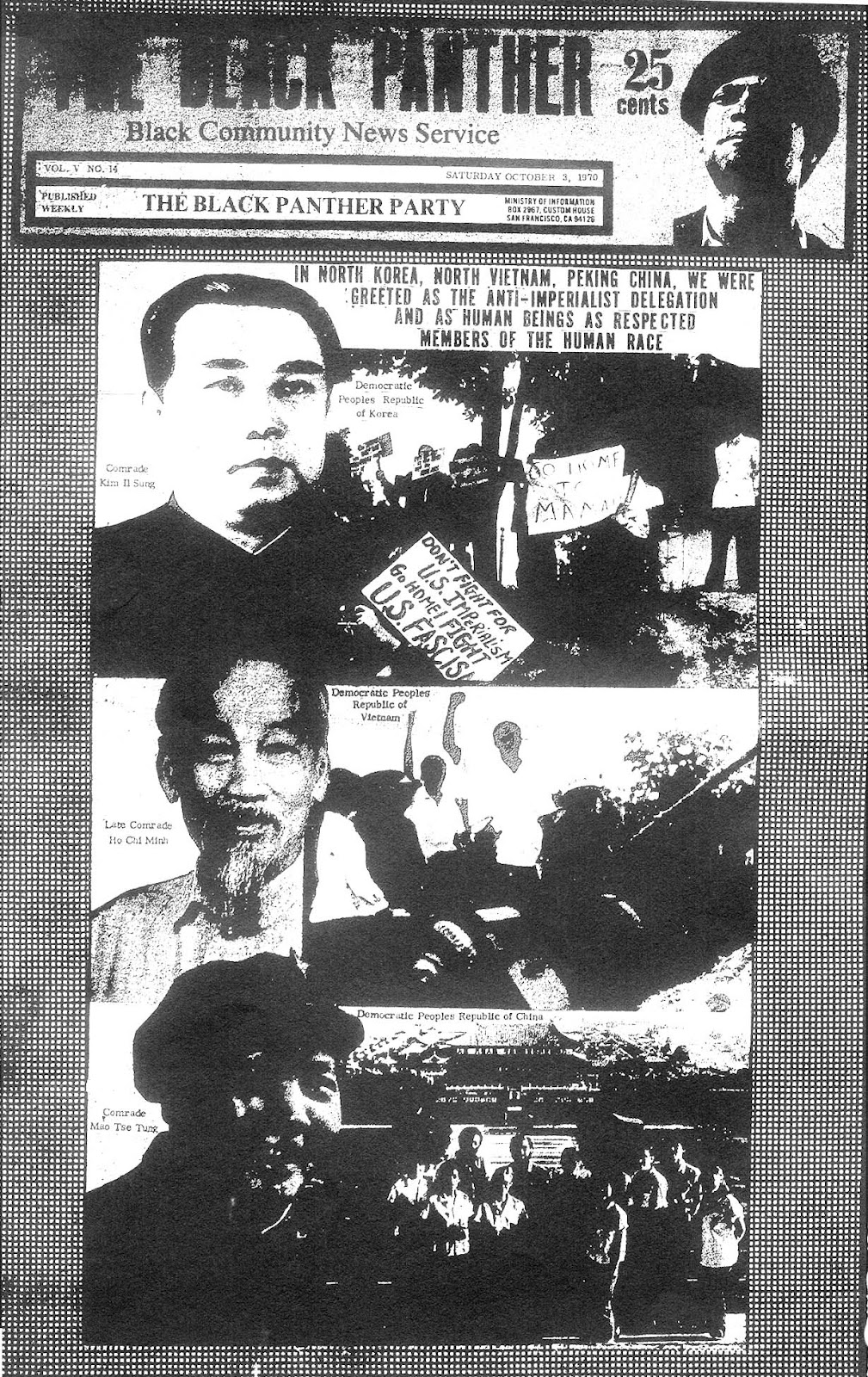
The party was founded on an eclectic Black Panther newspaper Kim il Sungideological basis but it included many ideas and theories from Marx, Engels, Lenin, Mao and Castro. Unsurprisingly in the context of the times, the influence of Mao Zedong and China’s Great Proletarian Cultural Revolution was strong, as was the party’s friendship with Kim il Sung’s Democratic People’s Republic of Korea, which sheltered many escaped Panther members.

The BPP openly and repeatedly praised the socialist revolutions in Vietnam, Cuba and China. In its early years, the party also raised money to buy shotguns (which they openly carried while on patrol) by selling copies of Quotations of Chairman Mao.

Comrade Assata left the Black Panther Party in the tumultuous years that followed the McCarthyite political repression that the CIA, led by Hoover, unleashed on the black liberation and socialist movement under the codename Cointelpro, and which saw many Panthers summarily executed by the state. She would later join the Black Liberation Army.

As a result of defending herself from an assassination attempt by the state, Comrade Shakur was found guilty by the US courts of several crimes, including the killing of one New Jersey state trooper and the wounding of another. She escaped from prison in 1979 and has been living in Cuba in political asylum since 1984.

There have been multiple attempts to extradite her. In 1997, Carl Williams, superintendent of the New Jersey state police  wrote a letter to Pope John Paul II requesting him to raise the issue of Shakur’s extradition during his talks with President Fidel Castro.

Since 2005, the FBI has classified her Comrade Assata a ‘domestic terrorist’. In 2013, the FBI made Shakur the first woman to feature on its list of most wanted ‘terrorists’ and a $2m bounty was offered for her capture.

Comrade Assata Shakur, like thousands of other young revolutionary women in the 1960s – took a stand against the injustices of the imperialist system and has remained a firm anti-imperialist fighter until this day. A generation of young black Americans fought bravely in the ranks of the Black Panther Party and the other revolutionary organisations of those times and faced immense hardship and the brutality of the United States police and secret services.

Assata stands tall today as an example to a whole new generation of women: dare to struggle and dare to win!

Leila Khaled

Red Youth salutes the revolutionary women of the world! Our young cadre will be publishing short pieces all this week to celebrate our revolutionary heroines in the run up to International Women’s Day. Today, Comrade Adam, aged 12, discusses Leila Khaled.

Red Youth will be meeting to celebrate International Women’s Day on 9 March, at 1.00pm, at the CPGB-ML party centre 274 Moseley Road, Highgate, Birmingham.

In the beginning, all women had to prove that we could be equal to men in armed struggle. So we wanted to be like men – even in our appearance … I no longer think it’s necessary to prove ourselves as women by imitating men.

I have learned that a woman can be a fighter, a freedom fighter, a political activist, and that she can fall in love, and be loved, she can be married, have children, be a mother … Revolution must mean life also; every aspect of life.

– Leila Khaled

Leila Khaled is a member of the Popular Front for the Liberation of Palestine (PFLP). She was born on 9 April 1944 in Haifa, Palestine. She and her family fled to Lebanon during the 1948 Nakba (Catastrophe), leaving her father behind.

At the age of 15, following in the footsteps of her brother, Leila joined the radical Arab Left Nationalist Movement, originally started in the late 1940s by Comrade George Habash. The Palestinian branch of this movement became the Popular Front for the Liberation of Palestine after the 1967 Six-Day War.

Leila Khaled with portrait
Leila Khaled with a portrait of her younger self

Comrade Khaled came to public attention for her role in a 1969 hijacking of the TWA Flight 840, which aimed to publicise Israel’s oppression of the Palestinians. On its way from Rome to Athens, she and her comrades diverted a plane to Damascus. She ordered the pilot to fly over Haifa, so she could see her birth place, which she could not return to. No one was injured, but the aircraft was blown up after all the hostages had disembarked.

After this high-profile operation, Leila underwent six plastic surgery operations on her nose and chin to conceal her identity and allow her to take part in a future hijacking – and because she did not want to wear the face of an icon.

On 6 September 1970, Leila and Patrick Arguello, a Nicaraguan, attempted the hijack of Israeli El-al flight 219 from Amsterdam to New York as part of the Dawson Field hijackings – a series of almost simultaneous hijackings carried out by the PLFP. The attack was foiled when Israeli sky marshals killed Arguello and overpowered Khaled. Although she was carrying two hand grenades at the time, Khaled had received very strict instructions not to threaten passengers on the civilian flight.

The pilot diverted the aircraft to Heathrow airport in London, where Leila was delivered to Ealing police station. On 1 October, the British government released her as part of a prisoner exchange. The next year, the PFLP abandoned the tactic of hijacking, although splinter movements continued to hijack airplanes.

Leila Khaled in Damascus
Leila Khaled, defiant, in Damascus

Speaking about Palestinian freedom fighters such as comrade Khaled, and the many martyrs and soldiers of the PFLP and PLO, the legendary George Habash said these words:

I remember each of the martyrs, one by one, and without exception – those martyrs to whom we are indebted, for whom we must continue the struggle, holding fast to the dream and holding fast to hope, and protecting the rights of the people for whom they shed their blood. Their children and their families have a right to be honoured and cared for. This is the least we can do for those blazing stars in the skies of our homeland.

I also remember now the heroic prisoners in the jails of the occupation and the prisons of the Palestinian Authority – those militants who remind us morning and night of our patriotic duty by the fact that they are still there behind bars and by the fact that the occupation still squats on our chests. Each prisoner deserves the noblest signs of respect …

Now permit me to express my gratitude to all the comrades who have worked with me and helped me, whether in the Arab Nationalist Movement or in the Popular Front. They stood beside me during the hardest conditions and the darkest of times, and they were a great help and support for me. Without them I would not have been able to carry out my responsibilities. They have been true comrades, in all that the word implies.

Those comrades helped to create a congenial atmosphere, an environment of political, theoretical, and intellectual interaction that enabled me to do all that was required. Those comrades have a big place in my heart and mind. I offer all my thanks and appreciation to each one of them by name. In addition, to the comrades who vigilantly guarded me, looking out for my safety, all these long years, I offer my gratitude …

As a last word, I feel it necessary to say that I know well that the goals for which I worked and struggled have not yet been attained. And I cannot say how or when they will be attained. But on the other hand, I know in light of my study of the march of history in general, and of Arab and Palestinian history in particular, that they will be attained.

In spite of this bitter truth, I leave my task as General Secretary of the Front with a contented mind and conscience. My conscience is content because I did my duty and worked with the greatest possible effort and with complete and deep sincerity. My mind is content because throughout my working years, I continually based myself on the practice of self-criticism.

It is important to say also that I will pay close attention to all your observations and assessments of the course taken by the Popular Front while I was its General Secretary. I must emphasise that with the same close attention, if not with greater attention, I will follow and take to heart the observations and assessments of the Palestinian and Arab people on this course and my role in it.

My aim in this closing speech has been to say to you – and not only to you, but to all the detainees, or those who experienced detention, to the families of the martyrs, to the children of the martyrs, to those who were wounded, to all who sacrificed and gave for the cause – that your sacrifice has not been in vain. The just goals and legitimate rights which they have struggled and given their lives for will be attained, sooner or later. I say again that I don’t know when, but they will be attained.

And my aim, again and again, is to emphasise the need for you to persist in the struggle to serve our people, for the good of all Palestinians and Arabs – the good that lies in a just and legitimate cause, as it does in the realisation of the good for all those who are oppressed and wronged.

You must always be of calm mind, and of contented conscience, with a strong resolve and a steel will, for you have been and still are in the camp of justice and progress, the camp whose just goals will be attained and which will inevitably attain its legitimate rights. For these are the lessons of history and reality, and no right is lost as long as there is someone fighting for it.

Khaled continued to return to Britain for speaking engagements until as late as 2002, although she was refused a visa by the British embassy in 2005 to address a meeting at the Féile an Phobail in Belfast, where she was invited as a speaker.

She is now married to the physician Fayez Rashid Hilal, and today lives with their two sons Bader and Bashar in Gaza, Palestine, where she currently serves on the Palestinian National Council.

Leila Khaled on the PNC
Leila Khaled currently serves on the Palestinian National Council, the legislative body of the Palestinian Liberation Organisation

Comrade Leila was the subject of a film entitled Leila Khaled, Hijacker. The documentary film Hijacker – The Life of Leila Khaled was directed by Palestinian filmmaker, Lina Makboul.

Laila Khaled will always be remembered as a freedom fighter who stood up against the oppression of her country’s people. She fought against Israel and imperialism and for the liberation of Palestine.

Clara Zetkin

Red Youth salutes the revolutionary women of the world! Our young cadre will be publishing short pieces all this week to celebrate our revolutionary heroines in the run up to International Womens Day. Today Birmingham comrade Phil, aged 22, discusses Clara Zetkin.

Red Youth will be meeting to celebrate International Women’s Day on 9 March, at 1.00pm, at the CPGB-ML party centre 274 Moseley Road, Highgate, Birmingham.

Women’s propaganda must touch upon all those questions which are of great importance to the general proletarian movement. The main task is, indeed, to awaken the women’s class consciousness and to incorporate them into the class struggle.

Clara Zetkin

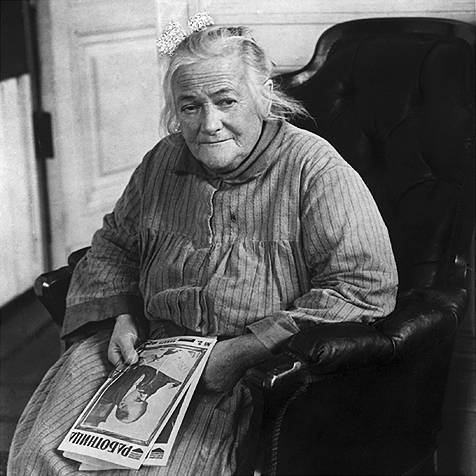
Born as Clara Eißner, the eldest of three children in Saxony, Germany in 1857, Clara Zetkin lived a life of struggle – for socialism, for women’s rights and against fascism.

Her mother already had contacts with the emerging bourgeois women’s movement at the time and Clara herself became politically active from 1874, joining the Social Democratic Party of Germany (SPD) in 1878. However, Bismarck’s draconian ‘Socialist Law’, which banned extra-parliamentary political activities, forced her into exile in 1882, first to Zurich and then to Paris.

During her time in the French capital, she adopted the name of her life partner, the Russian Marxist Ossip Zetkin, with whom she had two children. There she also played a significant role in the founding of the Second International in 1889, which would two-and-a-half decades later so disgracefully collapse over the question of the first world war – splitting the socialist movement and for the first time clearly showing the reactionary and chauvinist nature of what we now know as social democracy.

Clara Zetkin

From early on in their time with the SPD, Clara Zetkin and comrade Rosa Luxemburg were part of the inner-party opposition, which came to be known as the Spartacus League (Spartakusbund) and consisted of fierce critics of Eduard Bernstein’s reformist views. She was among those consistently arguing against Bernstein and his followers in the revisionism debate.

Having returned to Germany in 1890, Zetkin worked as editor and publisher of The Equality (Die Gleichheit), a proletarian women’s magazine. She proved to be a brilliant journalist, increasing the paper’s circulation from 11,000 to 67,000 between 1903 and 1906.

When she joined the Independent Social Democratic Party of Germany (USPD) in 1917, she was ‘relieved’ of her duties at the publication for petty political reasons. In 1919, she finally joined the newly-formed Communist Party of Germany (KPD) and started to publish a new magazine, called Die Kommunistin, meaning ‘the female communist’.

In addition to her publications work, Clara Zetkin was one of the first few women deputies at both regional and national parliaments, taking advantage of the small concessions made by the bourgeoisie to advance women’s rights in practice and push towards their representation in public life.

Nevertheless, she also was a staunch critic of the bourgeois women’s movement. In a speech in 1899 at the founding congress of the Second International, Comrade Zetkin criticised demands for formal political rights such as that of access to the professions and equal education for women (while perfectly legitimate and important) as not going far enough, and argued that full social and economic emancipation would only be possible under socialism.

In 1911, Comrade Zetkin was also heavily involved in the birth of International Women’s Day – the day we will soon be celebrating. After an encouraging start in central Europe, especially in the Austro-Hungarian Empire and Germany, Women’s Day spread around the world. Indeed, demonstrations marking Women’s Day were instrumental in sparking the February Revolution in Russia in 1917.

In 1932, after being re-elected to the German parliament (Reichstag) at the age of 75, Comrade Clara used her speech at the opening of parliament to passionately denounce the policies of Hitler and his thugs. After the National Socialists came to power in 1933 and banned the KPD (having blamed the Reichstag fire on them), Comrade Zetkin was forced into exile once again – this time choosing to live in the Soviet Union.

Comrade Clara died soon after, on 20 July 1933, at the age of 76, and the urn containing her ashes was personally carried to the Kremlin Wall Necropolis by Josef Stalin.

Clara Zetkin